
Published by Dating for Busy Professionals
When the window is short but reliable
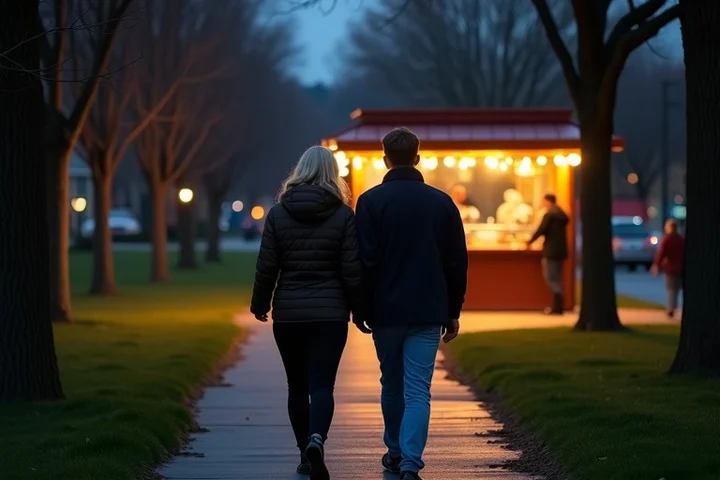
When both people can count on a brief opening after work, use one contained activity near the route home. A walk ending at one destination, dessert, a bookstore browse, a single exhibit, or a casual drink gives the evening a clear shape without requiring a compressed itinerary.
Proximity matters as much as the activity. A plan that needs two rides, a parking change, or several stops turns a short date into a sequence of transitions. One place with a natural endpoint leaves room to talk and makes it easy to depart on time.
Contained options that still feel like dates
Meet for a bookstore browse, then go out for a full meal and dessert.
Browse a bookstore together and treat a nearby tea or dessert as optional.
Plan a long walk, drinks, and another stop before going home.
Take a short walk that ends at a casual drink spot close to the route home.
Try to fit dinner around a cultural outing with a fixed closing time.
Choose one exhibit or low-key cultural stop, with a quick snack only if the timing works.
When energy is lower than available time
An open evening does not create social energy. When one or both people are mentally or physically spent, choose a seated, low-decision format: a quiet meal, tea or coffee, a park sit, or a low-key cultural stop. Low energy is not low interest; it is a reason to reduce the amount of preparation, movement, and sustained performance the date asks for.
High-stimulation plans often cost more than they return after work. A crowded activity, elaborate preparation, or a schedule that requires constant choices can leave both people managing the date instead of enjoying it. The better version gives conversation somewhere to go without demanding that either person supply momentum all evening.
Low-decision versions for established couples
Eat separately while handling the rest of the evening as usual.
Make a simple meal together and set the table or choose one dish neither person normally makes alone.
Watch a show while each person scrolls or handles other tasks.
Watch one episode together, then spend a few minutes talking about it before moving on with the night.
Run errands as efficiently as possible and call it a date.
Complete one necessary errand, then add a treat or a short neighborhood walk.
Spend the evening in the same room doing separate things without acknowledging it.
Read in parallel at a café or at home, then pause to share what held each person's attention.
When geography consumes the evening
A midpoint on a map is not automatically a fair meeting point. Compare the door-to-door burden: travel time, route reliability, traffic or transit connections, parking, and how difficult the trip home will be afterward. A place that is geographically central can still put most of the evening's effort on one person.
This matters especially when one route depends on a fragile transit connection or when a car-dependent commute makes parking and traffic part of the date. The fair option may be a transit connection, a location near one person's route home, or alternating neighborhoods across different dates.
The next morning also belongs in the calculation. If one person faces an early commute or a much longer return trip, a slightly uneven location may be more equitable than a nominal midpoint. The point is to share the burden over time, not to make every meeting place look mathematically centered.
When work may end late
Uncertain release time calls for a plan that can absorb delay. Walk-in venues, broad arrival windows, an activity close to the person whose work may run late, or a remote fallback protect the evening from a schedule that cannot be promised in advance.
Avoid formats tied to deposits, exact arrival times, or a narrow entry window when work could overrun. Those plans turn an ordinary delay into a financial loss, a missed activity, or pressure on the person who is still at work.
A flexible plan still needs a limit. If the uncertain end time has passed the point where the other person would spend most of the evening waiting, release them from the plan and use the fallback or reschedule the shared activity. That preserves consideration without treating an unpredictable workday as a personal failure.
Choose by stage, not just convenience
Convenience can create the wrong level of intimacy when two people are still getting to know each other. Early-stage dates work best in public, bounded formats: a coffee, a walk with a clear endpoint, dessert, a bookstore, or one casual drink. The public setting and defined duration make it easy for both people to participate without being locked into a long evening.
Home-based plans are efficient for established couples because they remove travel and make ordinary rituals available as shared time. Too early, the same format can create pressure or safety concerns that a public plan avoids. Relationship stage changes what a practical date communicates.
Options between two workplaces or homes can work when the setting remains public and the travel burden is genuinely shared. Choose the format by four practical selectors: available energy, travel burden, certainty about when work ends, and how well the two people know each other.